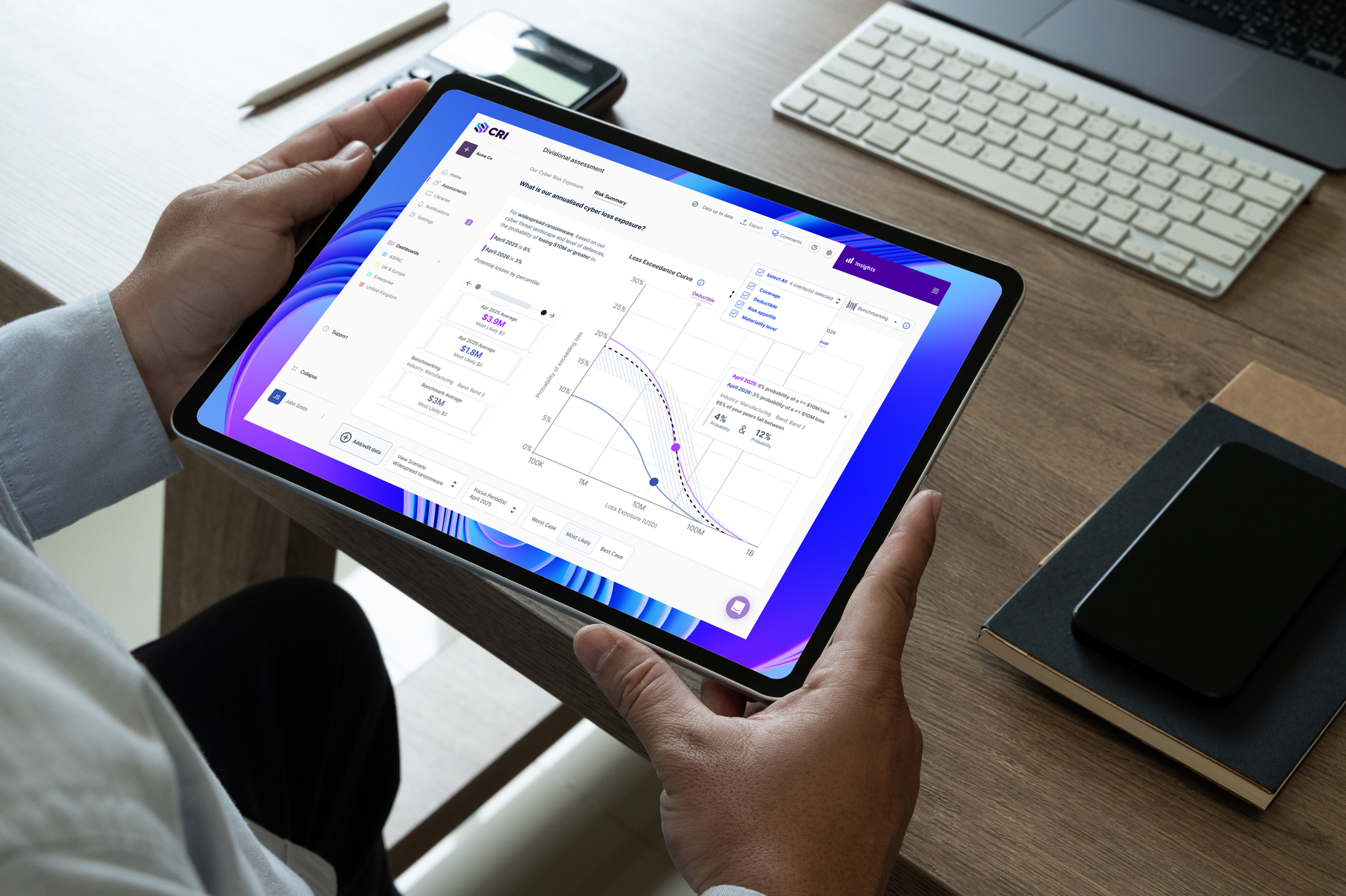
How Principality is protecting member trust through better cyber decisions.
Principality Building Society used Cyber Risk Insights (CRI) to move beyond qualitative cyber risk assessments, modelling priority threat scenarios and quantifying financial exposure to prioritise investment and build a data-backed cyber strategy.
01
Introduced a new approach to cyber risk decision-making, backed by financial impact modelling.
02
Prioritised cyber investment based on most cost-effective risk reduction.
03
Built a multi-year cyber strategy shaped by quantified risk exposure.
ANNOUNCEMENT
CRI (a KPMG product) named a ‘Leader’ by Forrester Wave™️: Cyber Risk Quantification Solutions, Q2 2025
Forrester recognises CRI (KPMG's Cyber Risk Quantification solution) for superior user experience, model transparency, scenario scoping, comparative analysis, prioritisation, and control performance monitoring.
The challenge: Balancing member trust, resilience and cyber investment
Trust is one of Principality Building Society's most valuable assets.
As a member-owned organisation, Principality has a responsibility to protect member information, maintain resilient services and support members when they need it most. To do this effectively, the organisation needed a clearer understanding of its cyber risk exposure and where investments would have the greatest impact.
While traditional risk assessments and maturity reviews provided useful insight, they couldn't answer critical business questions:
What is our potential financial exposure to cyber risk?
Which threats pose the greatest risk to the organisation?
Where should investment be prioritised to reduce risk most effectively?
Principality wanted a more rigorous, evidence-based approach that could translate cyber risk into business terms and support more informed decision-making.
Until we had CRI, we were relying on qualitative estimates rather than estimates based on data.
David Garwood Information Security & Governance Lead, Principality Building Society
The solution: Quantifying risk exposure to guide cyber strategy and investment
Working with CRI, Principality adopted Cyber Risk Quantification (CRQ) to model the threats most relevant to its business and assess their potential financial impact.
This provided a clearer understanding of the organisation's cyber risk exposure and translated technical threats into business terms. Leaders could see where risk was concentrated, how existing controls influenced outcomes, and where action would have the greatest impact.
Using CRI's cyber risk analysis and cost-benefit modelling, Principality evaluated how proposed security initiatives would reduce exposure across priority threat scenarios. This enabled a more evidence-based approach to cybersecurity investment, helping ensure resources were directed towards the areas likely to deliver the greatest reduction in risk.
CRI gave us data we could trust [and] that we could base decisions on.
Christopher Hicks Head of Operational Risk & Resilience, Principality Building Society
The difference: Expert support to embed data-backed cyber risk decision-making
The outcome was a better view of cyber risk and greater confidence in how decisions were made. By adopting a quantitative modelling approach and receiving expert advisory support with CRI, Principality gained:
Greater confidence in its cyber risk position, moving beyond NIST findings to understand the potential business impact of priority threats through CRI and CBEST.
Data-driven investment prioritisation, helping prioritise initiatives based on cost-effective risk reduction.
A more targeted and evidence-based cyber strategy, targeting improvements that support operational resilience and protect member trust.
For Principality, the value extended beyond the modelling itself. CRI provided the data, expertise and support needed to translate cyber risk insights into confident, evidence-based decisions that strengthened operational resilience.
The beauty of the product is some of the support you get from the team. To me, it feels more like a boutique service.
Christopher Hicks Head of Operational Risk & Resilience, Principality Building Society
About Principality Building Society
Principality Building Society is Wales’ largest mutual building society, providing savings, mortgage and lending services to its members with a focus on long-term financial wellbeing and community impact.
Forrester recognises CRI (KPMG's Cyber Risk Quantification solution) for superior user experience, model transparency, scenario scoping, comparative analysis, prioritisation, and control performance monitoring.
See CRI in action
Book a personalised demo and discover how CRI can help you make smarter cyber risk decisions.